LINQ for Business Analysts

LINQ is the decision-intelligence toolkit for experienced business analysts who are done with static diagrams, rework loops and slow discovery
  • "Without LINQ, the process of understanding the value of the opportunity to transform our business would take up to 10 times longer."
    Author image
    Phoebe Dunstan Strategy Analyst
  • "Capturing process time directly from a selection of end-users gave us certainty that our data and findings were accurate, rather than having to justify an educated guess."
    Author image
    Kirsty Irvine Senior Business Analyst
  • "LINQ helped our business identify approximately 134 wasted work hours for every Record Specialist per month, that's 8,000 hours saved per year."
    Author image
    COO DocuVault

LINQ for BAs

LINQ is an information-first modelling and analysis platform that creates a living Digital Twin of your organisation, connecting people, processes, systems and information into one quantified model.

​​

Instead of scattered Visio diagrams, whiteboards and spreadsheets, you get a shared model that calculates effort, cost, capacity, value and even carbon for every scenario you test.

​​

LINQ adds what traditional BPMN, swim lanes and mapping tools miss: information supply chains, Lean Six Sigma waste tagging, AI-assisted discovery and built-in scenario simulation.

It is designed so stakeholders actually understand what they see, so workshops run at the speed of conversation and end with quantified, defensible options instead of vague actions.
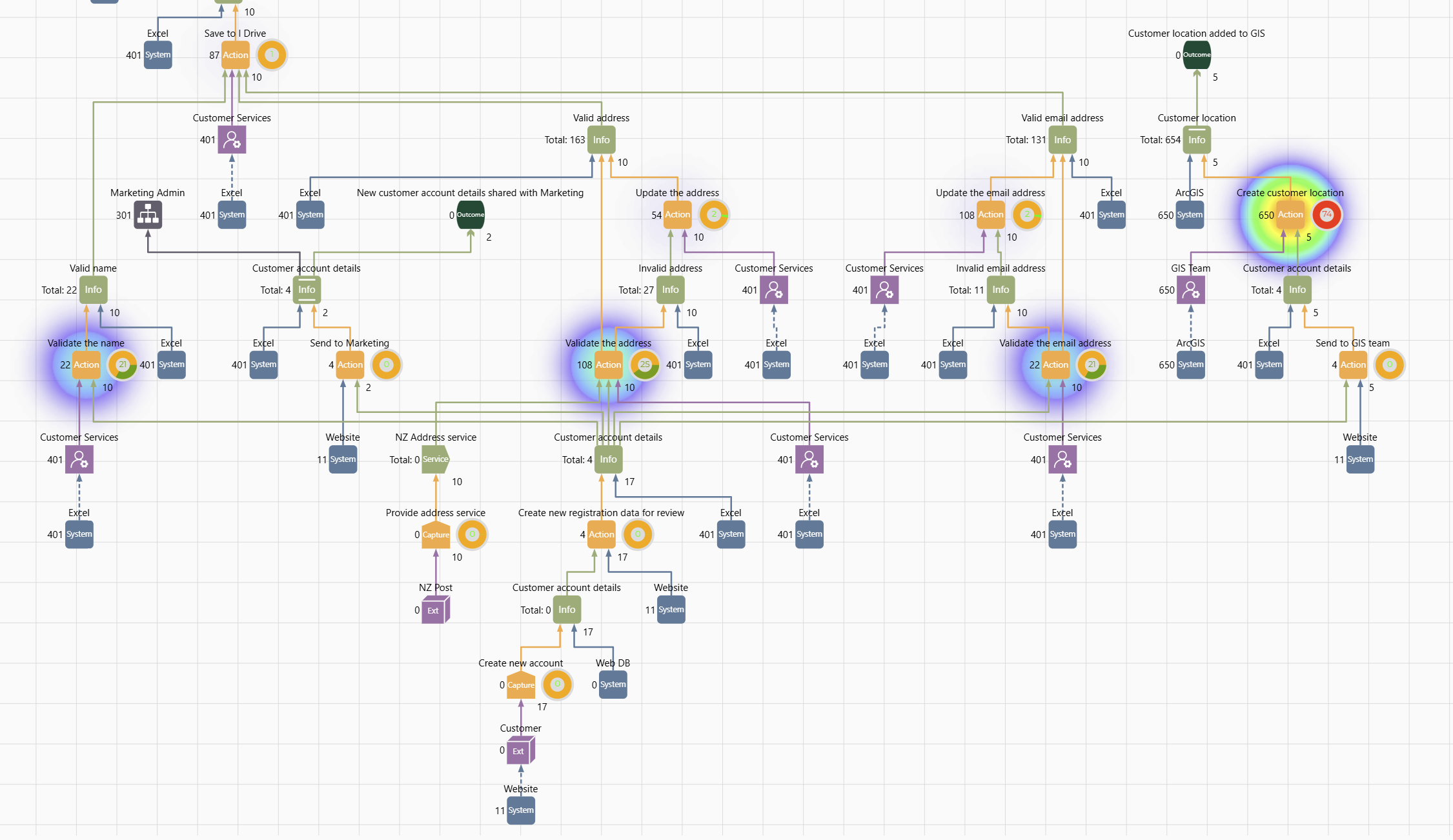
Process bottlenecks showing as a heatmap from using the Temporal model tool

Why change your BA practice?

Business analysis is at a crossroads: 70% of transformation projects still fail to deliver expected value, and static ‘as-is’ diagrams are often out of date the moment they are finished.


Analogue-first workshops and manual re-typing into Visio, PowerPoint, and Excel create a rework loop that burns BA time and erodes stakeholder trust.


LINQ helps you move to information-first, digital-twin-driven analysis that compresses weeks of discovery into days.


You capture reality once, quantify effort and cost as you go, and reuse the same digital twin across initiatives for continuous improvement instead of rebuilding analysis from scratch.

"The structured models and insights are great - incredibly intuitive to build and use, but it's the total experience which makes LINQ truly unique in the marketplace."
Thom Hornback
Project Controls and Business Operations, Lucid Motors

Key Features

  • Visualise Information Flows

    Transform complex processes into clear, actionable insights with interactive digital twins.

  • Identify Bottlenecks and Inefficiencies

    Pinpoint where time, money, and effort are being wasted.

  • Optimise Decision-Making

    Make data-driven choices to improve operations and reduce risk.

  • Improve Collaboration

    Align teams with a shared understanding of how information supports business goals.
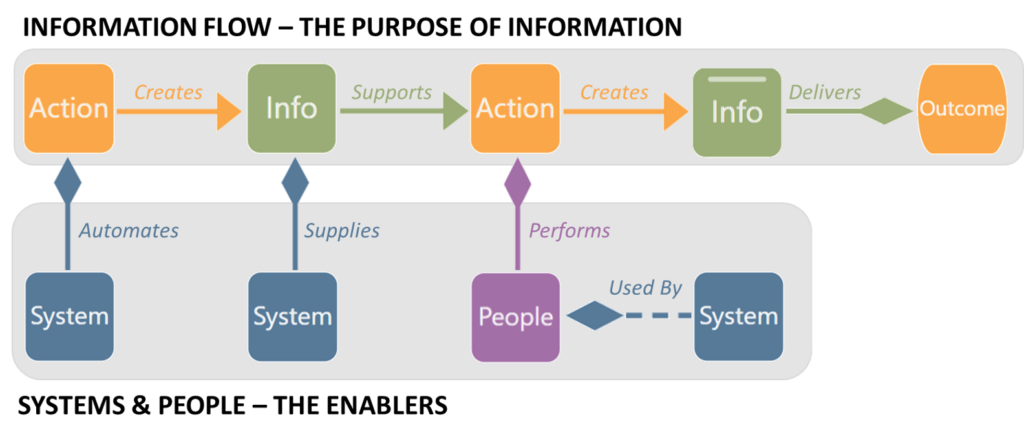
How You Actually Use LINQ

Think of LINQ as your end-to-end BA operating system: model reality, quantify, read insights, test scenarios, and decide.

Model reality at the speed of conversation

Run live workshops where you model actions, information, roles and systems directly in LINQ, projected for everyone to see.

Capture how information really flows, including exceptions and workarounds, instead of an idealised process that no one recognises.

Build a defensible business case

Export headline deltas (hours saved, cost avoided, automation %, carbon), role impacts and system changes directly from your quantified model.

Use a simple narrative scaffold – problem, options, quantified impacts, recommendation, risks, measures – to build exec-ready decks in record time

Quantify early, not later

Add duration and frequency as soon as actions exist; LINQ automatically calculates effort, cost and capacity for each role and process.

Tag gain points and DOWNTIME wastes (rework, waiting, duplication, over-processing) in real time so bottlenecks show up in the data, not in hindsight.

Read insights and design scenarios

Use built-in insights to see total cost, time, role utilisation, system value, and carbon footprint for your current state.

Clone the model and test scenarios such as automation, AI assistance, policy tweaks or system consolidation, then compare impacts side-by-side.

Control and continuous improvement

Keep your Digital Twin updated as changes land, using it as a reference for onboarding, benefits tracking and the next wave of improvement.

Standardise your BA rhythm around the LINQ model so discovery, design, and benefits realisation become one continuous loop, not disconnected projects

The LINQ workshop experience

LINQ workshops feel different from traditional requirements meetings and sticky‑note sessions – and that is intentional.

Participants see their contributions captured live on screen, every action, hand‑off, system and role, with duration, frequency and tags – which builds trust and psychological safety.

Because modelling, quantification and tagging happen in real time, insight emerges during the session, not weeks later when memories have faded.

BAs report that quieter voices speak up, people feel ownership because they can literally see their work in the model, and the group leaves with clear, quantified priorities instead of a long, fuzzy action list.

One client re‑ran a completed business case through LINQ and, in a single hour, uncovered a missed impact that increased the value of the change by about 40%.

Lean Six Sigma, information-first

If you already think in Lean Six Sigma, LINQ lets you apply DMAIC and DOWNTIME to the information supply chain, not just manufacturing or service lines. ​

You define and measure by modelling reality, tagging wastes and quantifying duration and frequency for every action in the flow.

You then analyse and improve by using insights and scenarios to remove bottlenecks, rework and over-processing before you commit resources or sign off budgets.

Your digital twin becomes the control layer that sustains improvements over time, making continuous improvement a living practice rather than a one-off project.

Get practical insights to make change work

No fluff - just useful ideas for reducing waste and carbon, de-risking transformation and making smarter decisions before you commit time or budget.